The Siren Song of Solana’s Dynamic Liquidity
The Solana ecosystem has once again become the epicenter of crypto’s capital velocity, but the playbook has fundamentally mutated. By May 2026, the cumulative volume flowing through Solana’s decentralized exchanges (DEXs) has broken past an unprecedented $1.2 trillion, briefly flippening Ethereum mainnet in sustained daily fee generation.

At the absolute heart of this liquidity vortex sits Meteora—Solana’s premier yield infrastructure layer. As rumors and point allocation systems for the highly anticipated meteora airdrop reach a fever pitch, the protocol has achieved a staggering Total Value Locked (TVL) of $1.45 billion.
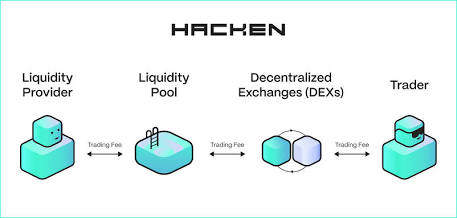
Strip away the complex mathematical algorithms of its Dynamic Liquidity Market Maker (DLMM), and Meteora solves a brutal, real-world commercial bottleneck: the localized liquidity crisis of the internet age. In traditional financial systems and early automated market makers (AMMs), providing capital for highly volatile assets like memecoins or liquid staking tokens (LSTs) meant guaranteed financial ruin via impermanent loss.
Meteora transforms passive capital into an active, programmatic yield engine. It allows anyone to capture institutional-grade trading fees by concentrating liquidity within precise price bins. However, as billions of dollars chase the snapshot, a critical, multi-million-dollar question emerges: Are participants executing a masterclass in liquidity farming, or are they blindly positioning themselves as the ultimate exit liquidity for sophisticated market insiders?
The Mechanics of the Metamorphosis
Meteora isn’t just leading the Solana DeFi renaissance; it is fundamentally altering its economic topography. Over the course of Q1 2026, Meteora generated an astronomical $42.6 million in raw protocol fees, representing a blistering 142% year-over-year growth compared to Q1 2025.
To validate the true commercial viability of this ecosystem, we must analyze Meteora through a strict Dual-Data Validation lens:
-
The Supply-Side: Meteora’s infrastructure is sustained by over 85,000 unique daily active liquidity providers (LPs) who supply capital to its automated dynamic pools.
-
The Demand-Side: This capital isn’t sitting idle. Driven by the relentless Solana memecoin supercycle and enterprise-level aggregators like Jupiter, over $380 million in daily trading volume actively routes through Meteora’s bins, directly paying out real-time trading fees to depositors.
To understand how this macroeconomic monster impacts everyday lives, look at the micro-level reality of automated capital. Consider the case of Tuan, a 26-year-old former freelance graphic designer based in Ho Chi Minh City, Vietnam.
“I quit my client work last year to manage capital full-time on Solana,” Tuan explains. “By utilizing Meteora’s DLMM pools for volatile pairs like JUP/SOL and high-volume memecoins, I concentrate my liquidity within a narrow $\pm 2\%$ price range. On a capital base of $15,000, I am pulling in an average of $90 to $120 a day in pure trading fees. Even without factoring in the eventual meteora airdrop, my hardware and capital payback period was achieved in less than 50 days. It’s entirely replaced my physical income.”
Market Comparison Matrix
To evaluate where Meteora stands in the hyper-competitive landscape of on-chain capital efficiency, we cross-examine it against its closest native and cross-chain rivals as of May 2026:
| Project/Protocol | Active Scale (Nodes/LPs) | Q1 2026 Revenue (Fees) | Primary Use Case / Core Edge |
| Meteora (Solana) | ~85,000 Active Daily LPs | $42.6 Million | DLMM / Dynamic Fee Pools. Maximum capital efficiency for highly volatile and long-tail assets via localized price bins. |
| Raydium (Solana) | ~110,000 Active Daily LPs | $61.2 Million | Ecosystem Launchpad Integration. The default pool creation layer for Raydium-dependent launch platforms; massive volume but higher impermanent loss risk. |
| Uniswap v4 (Ethereum/L2) | ~45,000 Active LPs | $89.5 Million | Customizable Hooks. Highly flexible architecture for institutional-grade MEV protection and dynamic TWAP oracles; hampered by high gas overhead on mainnet. |
The New Frontier: Just-In-Time Intent Farming
The cutting-edge evolution within Meteora isn’t found in stablecoin pools; it has migrated to the highly volatile fringes of Just-In-Time (JIT) Liquidity and Intent-Based Architecture. Advanced yield farmers are no longer manually setting ranges. They are running automated scripts that instantly inject capital into specific DLMM price bins seconds before massive, anticipated whale trades occur, capturing maximum fees and withdrawing capital immediately after.
This paradigm shift is perfectly captured in a viral post from an advanced on-chain developer on an exclusive Web3 alpha forum:
“I’ve completely automated my Solana deployment strategy using custom TypeScript bots hooked directly into Meteora’s DLMM SDK. My setup monitors the memecoin mempool for large purchase intents. The script inputs roughly $5,000 into the exact price bin where the buy order will hit, collects the 1% dynamic fee, and yanks the capital back into stablecoins within 3 blocks. Total setup cost was about $800 for a dedicated RPC node. My payback period was exactly 6 days. If the solana airdrop inspectors filter my wallet out for this, I honestly don’t care—the organic fee yield is already printing a ridiculous 240% APY.”
What Are the Biggest Risks in Meteora?
Despite the dazzling yields and the psychological allure of a massive solana airdrop payout, participating in Meteora’s dynamic pools exposes users to deep systemic vulnerabilities. The market is currently suffering from structural blindness regarding three fatal frictions:
-
The Illusion of Impermanent Loss Mitigation: While DLMM bins maximize fee capture, they also accelerate impermanent loss when an asset breaks out of your specified price range. If a memecoin dumps aggressively, your pool position is instantly converted entirely into the crashing asset, leaving you holding a bag of worthless tokens.
-
Toxic Flow & MEV Exploitation: High-yield bins frequently become targets for sophisticated Maximum Extractable Value (MEV) searchers. Retail liquidity providers are often forced to take the losing side of toxic flow arbitrage, where bots exploit temporary price discrepancies across different DEXs at the LP’s expense.
-
The Point Inflation Paradox: Much like previous high-profile airdrops, the protocol’s points system has led to massive wash-trading and artificial volume generation by industrial farming syndicates, threatening to heavily dilute the rewards of legitimate, smaller users.
? The Ultimate Core Metric to Watch: To filter out the speculative noise and evaluate if a Meteora pool is a legitimate yield engine or a dangerous trap, investors must monitor the Organic Fee-to-TVL Ratio (Non-Speculative Yield).
If a pool boasts a 500% APY, but $95\%$ of that volume is driven by circular wash-trading of an inflationary token with no outside buying pressure, you are functioning as exit liquidity. Look for pools where the fee generation is sustained by organic routing from non-speculative aggregators.
The Paradigm Shift: Sovereign Liquidity Provision
The structural evolution of Meteora signals a massive, irreversible shift in the global architecture of finance. We are moving away from an era where retail users function as passive consumers of banking products, toward a world where the individual acts as a Sovereign Liquidity Underwriter.
Meteora’s real-world utility lies in its ability to democratize market-making infrastructure that was once the exclusive domain of multi-billion-dollar Wall Street trading desks. It proves that decentralized coordination can efficiently price and sustain market liquidity for thousands of digital-native assets without relying on centralized intermediaries.
While the temptation of the upcoming token drop will undoubtedly bring short-term volatility, the long-term capital allocators who master the mathematics of dynamic bins will remain. They have stopped gambling on the direction of the market, choosing instead to own the very pipelines through which the market flows.