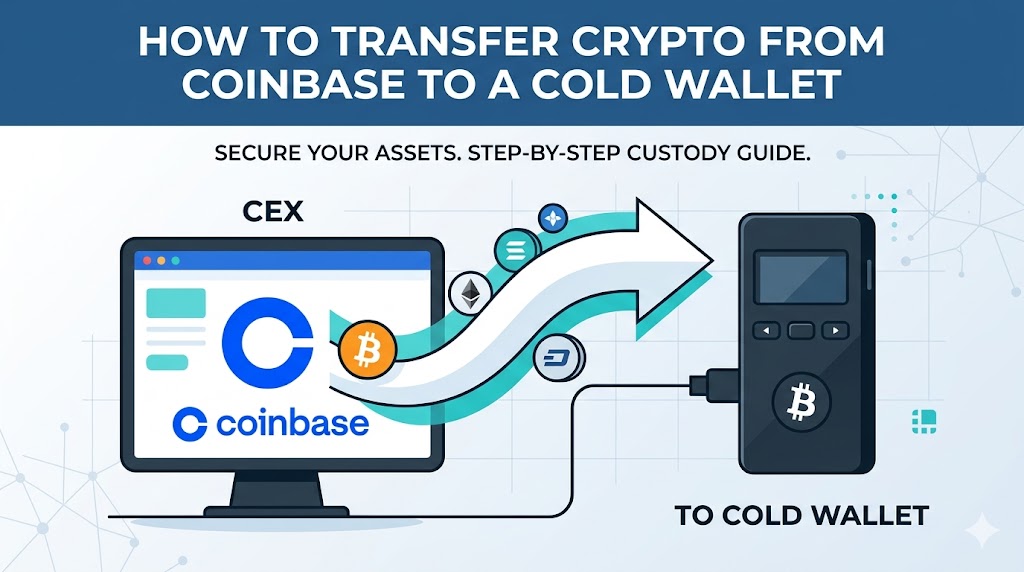
The Sovereign Shift: Why 2026 is the Year of Self-Custody
The era of leaving “life-changing” digital wealth sitting lazily on centralized entities is drawing to a close. While exchanges remain vital on-ramps, 2026 marks a definitive shift toward absolute asset ownership.
On-chain data reveals a profound macro trend: as the global crypto market faced a period of risk-off sentiment in Q1 2026, investors prioritized security over custodial convenience. Investors have realized that centralized exchanges (CEXs) are excellent liquidity engines but fundamentally flawed as long-term vaults.
1. The Institutional Standard: Securing the Perimeter
The modern self-custody landscape is no longer the domain of niche cypherpunks; it has become the institutional baseline. Driven by the need for deterministic control over treasury assets, hardware wallet manufacturers reported an aggregate Q1 2026 procurement revenue of approximately $89.2 million, signaling that professional entities and high-net-worth individuals are prioritizing sovereign security.
The Micro-Narrative: Protecting the Portfolio
Consider Hana, a 34-year-old professional who spent three years dollar-cost-averaging into a substantial portfolio on Coinbase. “I felt safe using a regulated platform,” she notes. “But in early 2026, after a friend’s account was frozen for three weeks due to an automated compliance flag, that was my wake-up call.” Moving her assets to a hardware device changed her relationship with her capital—transforming it from “entry lines on a database” to “sovereign property.”
2. Market Comparison Matrix (Q1 2026)
| Provider | Active Scale (Supply) | Q1 2026 Revenue | Core Value Proposition |
| Coinbase | 100M+ Verified Users | $1.41B (Total Revenue) | Fiat-to-crypto liquidity; compliance leader. |
| Ledger | 7.5M+ Devices Shipped | ~$44.1M (Est. Device/API) | CC EAL6+ chip; mobile-first UX. |
| Trezor | 3.2M+ Active Vaults | ~$22.4M (Direct Sales) | 100% open-source; quantum-resistant. |
Sources: Coinbase Global Q1 2026 Earnings Report; Industry Aggregates for Hardware/Services (Q1 2026).
3. The “Invisible” Risks: Execution Failures
While self-custody eliminates exchange counterparty risk, bad execution introduces new vulnerabilities. In 2026, the primary threats are not “hacks” but user-side errors:
-
Address Poisoning: Sophisticated malware monitors your clipboard, replacing your valid withdrawal address with a visually identical one. Verification is mandatory.
-
The Network Selection Blindspot: Sending assets via an L2 network (like Base) to a cold wallet that only recognizes Mainnet can lead to permanent loss.
-
Physical Key Degradation: The human factor—storing mnemonics on cloud drives or vulnerable paper—remains a leading cause of loss.
The Professional Metric: The Device-Side Verification Delta
Never trust the UI displayed on your desktop or mobile screen. The ultimate standard for safe transfers is the Device-Side Verification Delta:
Best Practice: Always verify the first 6 and last 6 alphanumeric characters on the physical hardware device screen against your source platform’s withdrawal field. If there is even a single character mismatch, terminate the transaction immediately.
4. Conclusion: Establishing Absolute Ownership
Transitioning assets from an exchange account to physical cold storage represents a psychological milestone: the evolution from a “passive account holder” to an “independent network node.”
By moving private keys away from centralized databases and into air-gapped infrastructure, you strip away the layers of counterparty friction that historically plagued early fintech platforms. In 2026, the winners in the digital economy aren’t just those with the most active trading volume—which saw significant volatility and declines in Q1—but those who have successfully moved their capital from “speculative claim” to “tangible, sovereign property.”