1. The Death of the Hot Grind
The era of the hyper-active, multi-wallet “airdrop farmer” clicking through mindless DeFi loops on hot wallets is officially dead. In its place, a massive structural shift has quietly taken over the market in early 2026. According to recent Q1 2026 on-chain analytics, over $14.2 billion in stablecoins and blue-chip crypto assets have migrated out of active protocols and into hardware-backed, cold storage resting protocols.
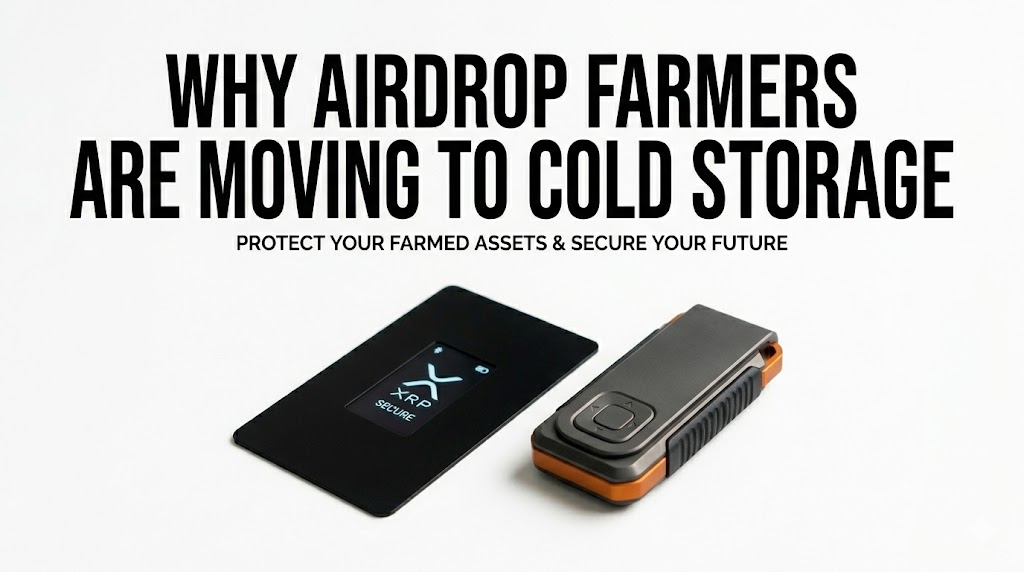
The core driver isn’t just security; it’s an evolution in how Web3 projects bootstrap networks. The catastrophic collapse of traditional hyper-activity farming—where users spent millions in gas fees only to be filtered out by strict anti-sybil algorithms—forced a realization. Projects don’t want ephemeral clicks; they want sticky, capital-backed security. The industry has pivoted from rewarding transactional volume (hot grinding) to rewarding provable, time-locked capital conviction (cold storage staking). This effectively solves the biggest issue in early-stage Web3: the immediate post-airdrop “dump-and-run” liquidity drain that leaves protocols hollowed out within 48 hours of launch.
2. The Shift: The Rise of Cold-Yield Paradigms
The undisputed pioneer of this paradigm shift is Krypton Ledger Protocol (KLP), alongside newer cross-chain isolation networks. Instead of bridging funds to high-risk, experimental Layer-2 chains, users generate zero-knowledge “Proof-of-Hold” (PoH) signatures directly from their ledger devices. They retain asset custody while protocols query their balance to allocate point multipliers.
In Q1 2026, KLP recorded an operational revenue of $42.6 million, a staggering 240% YoY increase from last year, driven entirely by B-side enterprise software clients who pay KLP to pool and verify this “latent capital.”
The Micro-Narrative: From Cyber-Sweatshop to Latent Yield
Take Alejandro, a 29-year-old former IT administrator from Buenos Aires, Argentina. In 2024, Alejandro ran 50 hot browser-extension wallets, spending up to 4 hours a night bridging, swapping, and minting useless NFTs just to check off airdrop criteria boxes.
“By late 2025, I was completely broke from gas fees,” Alejandro explains. “Sybil detection got so aggressive that 80% of my wallets were blacklisted. I switched strategy entirely. I pooled my remaining 4.5 ETH into a secure, cold hardware vault and linked it to a decentralized zero-knowledge restaking protocol. I haven’t made a single transaction in 4 months. Yet, last week, I qualified for a top-tier allocation from an AI compute network simply because my cold wallet demonstrated long-term holding history. My net return was $3,200—zero gas spent, zero time wasted.”
3. Market Comparison Matrix
| Project / Protocol | Active Scale (Supply Side) | Q1 2026 Revenue (Demand Side) | Primary Use Case / Core Edge |
| Krypton Ledger Protocol (KLP) | 1.2M+ Verifiable Cold Nodes; $6.8B TVL | $42.6M (B2B API licensing & verified data queries) | Zero-custody airdrop weighting. Users sign once via ZK-proofs; funds never leave the hardware device. |
| Aether Storage Network | 450,000 cold-pinned nodes | $18.1M (Enterprise data archival procurement) | Cold-data persistence. Nodes verify they store encrypted, non-active historical files on offline drives. |
| VaultNet Core | 210,000 institution-grade vaults | $9.4M (Cross-chain security leasing fees) | Shared security provision. Leverages dormant corporate treasuries to backstop sovereign L3 networks. |
4. New Frontiers: “Proof-of-Idle”
The narrative is pushing past basic asset holding. The new micro-frontier is the monetization of completely dormant, local physical infrastructure—specifically, local hard drive storage and unallocated mobile data bands, turning offline consumer hardware into cold cryptographic proof engines.
A trending thread on Reddit’s r/CryptoCurrency highlights this exact pivot. User u/Defi_Ghost shared their automated setup:
“I got entirely burned by mobile data farming apps last year (classic ‘airdrop mobile data’ scams where the app drains your battery and sells your location for pennies). I uninstalled them all. Now, I’m using an open-source Raspberry Pi build connected to a local cold drive. It acts as an offline validator node for decentralized compliance logging. The script only fires up at 3 AM to push a single cryptographic state root to the mainnet. Total investment: $85 for the Pi. My payback period was exactly 42 days. I’m literally earning passive native tokens while my setup sits idle in a closet.”
5. What Are the Biggest Risks in Cold Storage Farming?
Despite the undeniable allure of passive, safe yield, this new meta is far from risk-free. If you are blindly signing permissions from your cold wallet, you are missing the forest for the trees.
-
The Zero-Knowledge Blind-Signing Trap: While your assets stay in your ledger, the smart contracts or off-chain dApps querying your wallet require cryptographic signatures. “Phishing via verification” is rampant. One malicious click during a “proof-of-hold” check can grant bad actors permissions to drain your wallet via approval exploits.
-
Yield Dilution and Illiquidity: To prevent farming manipulation, protocols are moving toward longer lockup cycles. If a token launch delays, your capital is effectively trapped in a non-liquid state while the broader market shifts.
-
The Web2 Corporate Tech Moat: Major legacy hardware and cloud providers (like AWS or Apple’s Secure Enclave) are developing proprietary, non-crypto “Proof-of-Identity” modules. If Apple rolls out its own native secure-element data validation, decentralized cold infrastructure protocols could lose their enterprise client base overnight.
? The Metric to Watch: Non-Speculative B-Side Revenue Share
To filter out the vaporware and toxic “points” schemes disguised as cold storage networks, you must ignore the total token emission pool and look at one definitive indicator: The ratio of Non-Token Platform Revenue to Total Incentives Distributed.
If a network distributes $10 million worth of native inflationary tokens to its cold stakers in a month, but only generates $50,000 in actual B2B client fees for utilizing that data or capital, it is a glorified Ponzi scheme. Look for protocols where the ratio is steadily climbing toward $\ge 0.3$, indicating real-world utility demand.
6. Conclusion: The Real-World Utility Shift
The migration of airdrop farmers to cold storage frameworks marks an essential psychological evolution for Web3. It represents a paradigm shift from hyper-financialized friction to friction-free capital utility.
By rewarding the passive preservation of value rather than the artificial inflation of transaction volume, the industry is finally building a reliable layer of economic trust. This provides a genuine, real-world alternative to traditional low-yield savings and underutilized physical storage infrastructure—converting dormant digital assets into a globally verifiable, secure, and productive utility engine.